
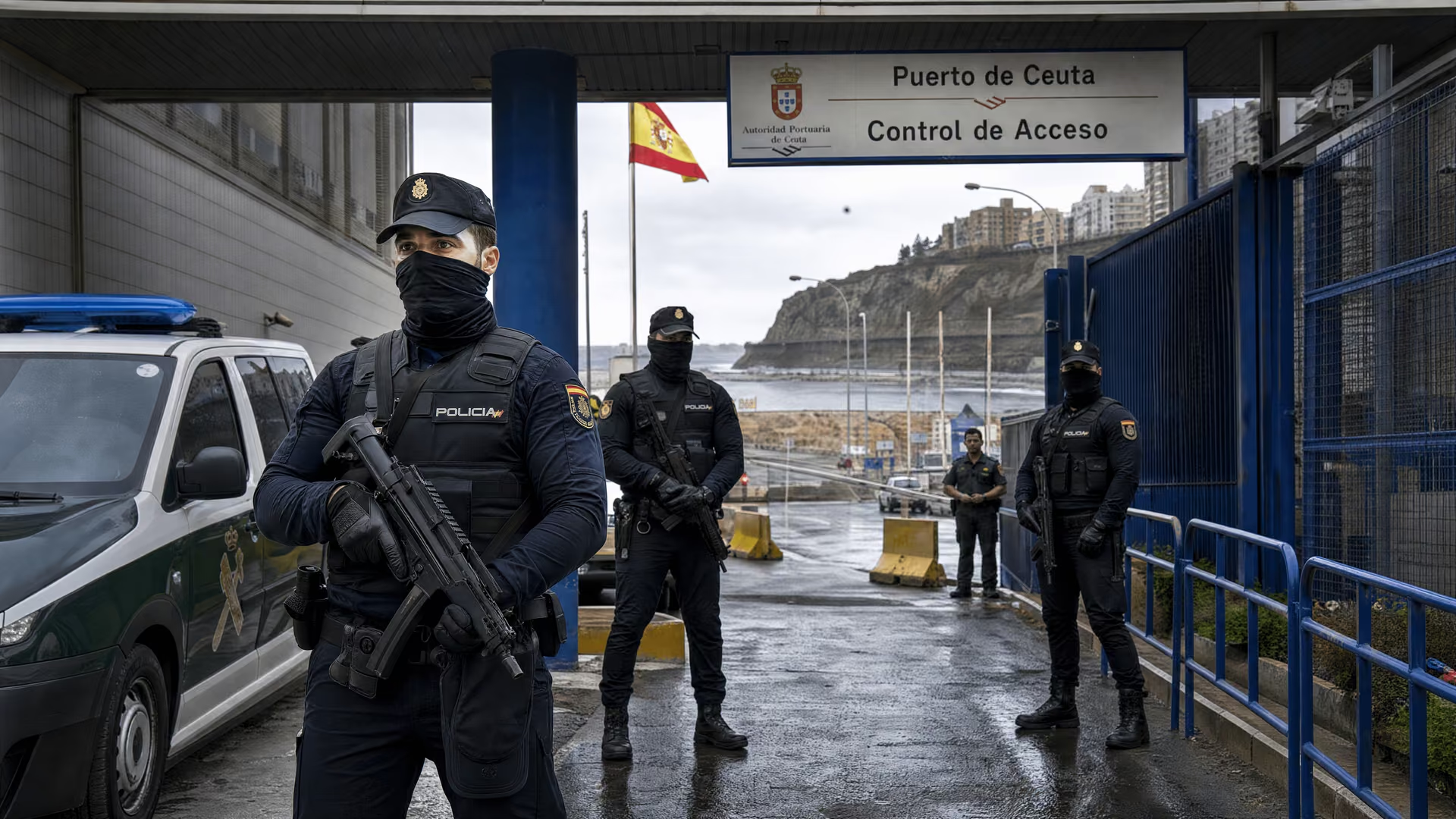
Spain’s Ceuta partially returns to normal after 50,000–60,000 entries from Morocco, but Interior keeps the response operation active.

Spain’s Government has kept its extraordinary security operation active in Ceuta after between 50,000 and 60,000 people entered from Morocco on 30 July, even as the Ministry of the Interior says the situation has been “practically reversed” two days later.
Ceuta moves back toward normality without ending the emergency
The city has begun to recover some normality after the largest migration crisis recorded in its recent history, but Spain’s central Government is not treating the emergency as over. The report on Ceuta’s partial return to normality says the Ministry of the Interior considers the situation “practically reversed” while warning that the extraordinary operation will remain in place until the risk of further irregular entry attempts has disappeared.
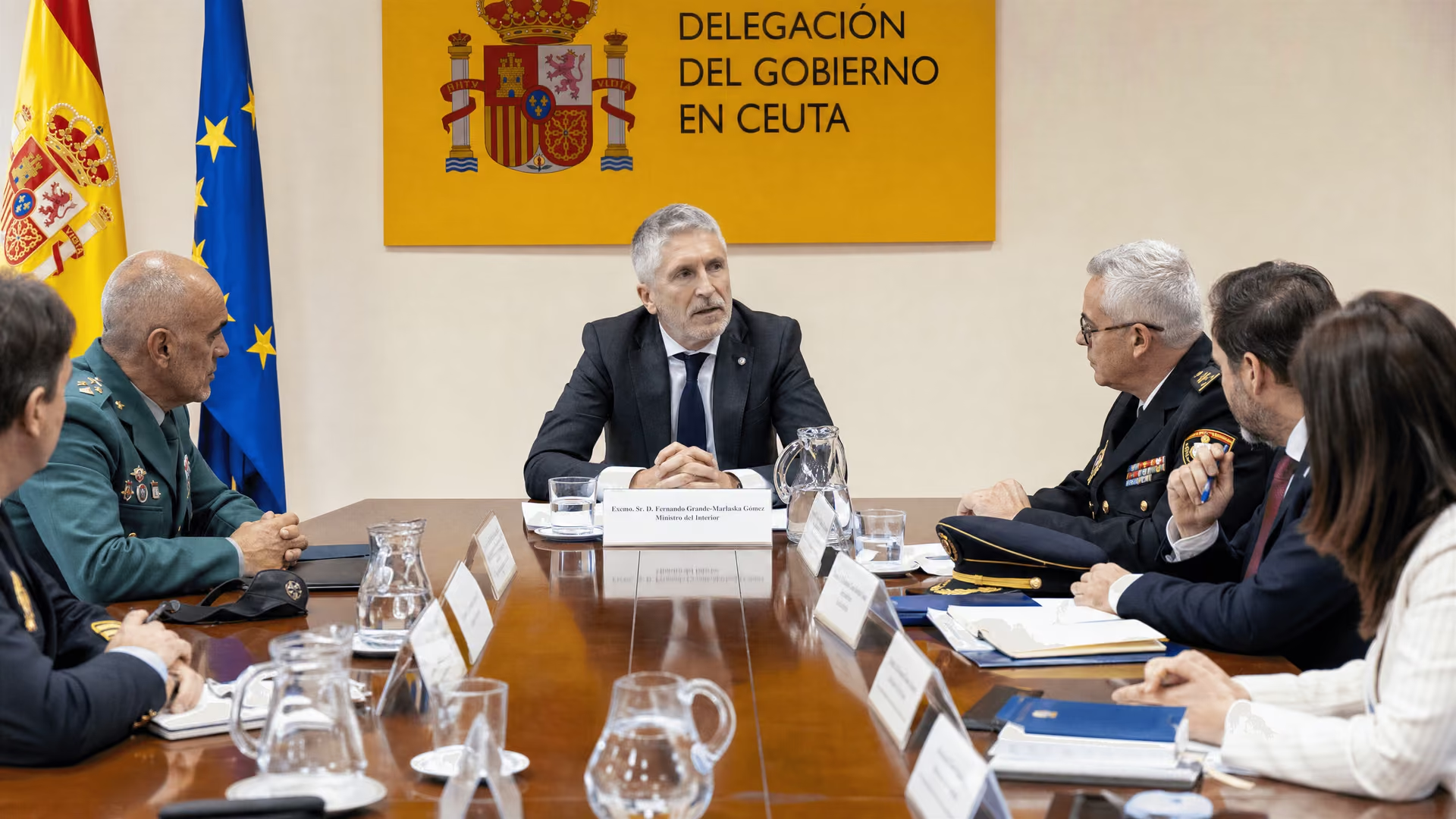
Interior Minister Fernando Grande-Marlaska delivered that assessment during a visit to Ceuta on 1 August. He met the Government’s delegate in the autonomous city, Miguel Ángel Pérez, along with senior representatives of the National Police, the Civil Guard and the Armed Forces. The meeting focused on how the operation had developed and on the measures still required after the mass arrival from Morocco.
Grande-Marlaska said the response by the authorities had helped reverse an “extraordinarily complex” situation in less than 48 hours. At the same time, he stopped short of declaring a return to the conditions that existed before the crisis. The Government’s position is therefore based on two assessments at once: the immediate pressure has fallen sharply, but the wider security and migration risks remain active.
The central figures explain why the Government is maintaining that cautious position:
The situation is “practically reversed”, but the crisis is not yet considered closed.
Spain’s Ministry of the Interior
A two-track response
The continued deployment is not presented by the Government as evidence that the emergency response has failed. Rather, it reflects the distinction Interior is making between restoring order on the ground and removing the possibility of another sudden attempt to enter Spanish territory. Police, border authorities and the Armed Forces will remain available in Ceuta while that assessment continues.
The human cost and the departures from Ceuta
The Interior Ministry began its account of the crisis by remembering those who died. Its balance puts the number of fatalities at at least 67, all during attempts to reach Ceuta by sea. The Government attributes those deaths to people-trafficking networks that, in its view, exploited the vulnerability of thousands of migrants during the episode.
The scale of the entry on 30 July was estimated at between 50,000 and 60,000 people. Interior said that the vast majority had already left the city after returns carried out in the following hours, easing pressure on public services and on the security systems deployed in Ceuta.
The Associated Press separately reported that tens of thousands of migrants returned voluntarily to Morocco after crossing into Ceuta, while Spanish authorities kept security and migration measures in place. That account adds an important distinction to the official figures: the number of people who entered was exceptionally high, but the number remaining in the city fell substantially during the immediate response.
This reduction does not remove the humanitarian dimension of the crisis. The reported deaths, the speed of the arrival and the pressure placed on Ceuta’s services form part of the Government’s explanation for keeping the operation activated even after the visible scale of the emergency has diminished.
A crisis that overwhelmed local capacity
The events of 30 July followed several days in which Ceuta’s authorities had already warned that arrivals were exceeding available resources. Reporting before the mass entry described an extraordinary arrival of mainly Moroccan migrants that had overwhelmed the city’s reception capacity and led local authorities to seek an immediate response from the Spanish Government. That earlier pressure helps explain why the national response was expanded so rapidly once the larger episode began.
Police, the Civil Guard and the Armed Forces stay deployed
The Government’s response now moves from emergency reaction to continued prevention. The Ministry of the Interior has not set out a final end point for the extraordinary deployment. Instead, it says the operation will continue for as long as necessary to control the border and respond quickly if new attempts at irregular entry take place.
The operation brings together several Spanish institutions whose responsibilities overlap during a border emergency:
- The National Police remains part of the security deployment maintained in Ceuta.
- The Civil Guard continues to be involved in the border operation and in the response to possible new entry attempts.
- The Armed Forces remain deployed alongside the police services while the Government evaluates the situation.
- The Government’s delegate in Ceuta coordinates with the autonomous city and the national security authorities.
- The Ministry of the Interior will review what happened with the Moroccan authorities once the emergency has definitively ended.
The institutional picture had already become more demanding before the 30 July crisis. A report on the earlier emergency in Ceuta described an arrival pattern that exceeded the city’s reception capacity. That background matters because Ceuta is an autonomous Spanish city with limited territory and services, making the ability to move people through the response system a central concern for both local and national authorities.
The Government is also insisting that irregular entry will not lead to regularisation. That message forms part of the political and administrative response, alongside the physical deployment at the border. Interior has not presented the return of many people to Morocco as a reason to dismantle the operation; its stated test is whether the risk of further attempts has genuinely disappeared.
The Tarajal barrier follows a Supreme Court ruling
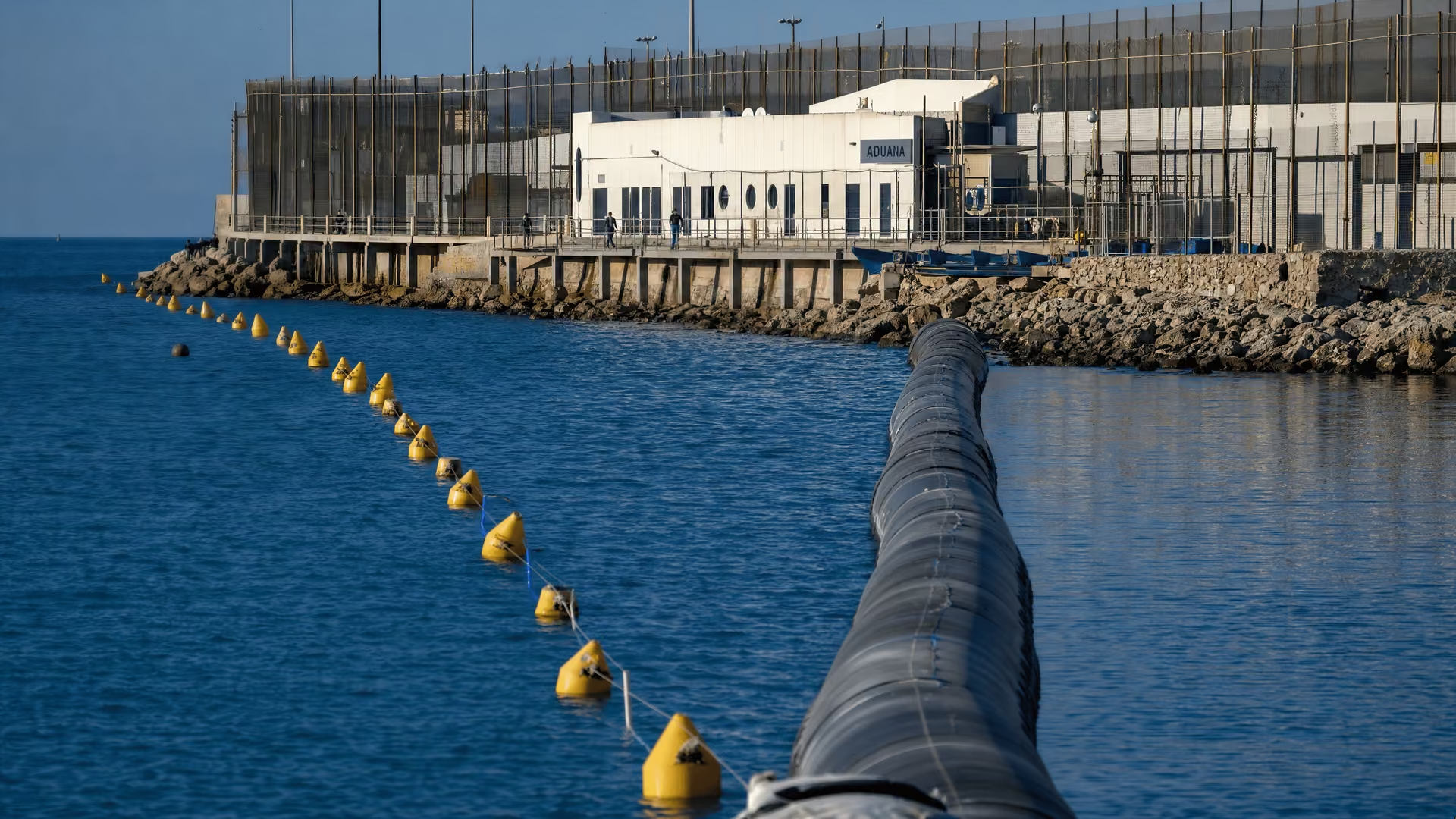
One of the first physical measures taken after the crisis was the installation of a new containment system at the Tarajal maritime border. Work began during the night on a pneumatic barrier accompanied by an initial line of buoys, with an intermediate channel left between them. The Government says the arrangement is intended to adapt the border system to a ruling by Spain’s Supreme Court.
The Supreme Court ruling of 8 July established that border rejections require a physical containment element that has already been overcome by the people attempting to enter Spanish territory. Interior accelerated the installation of the new barrier after the mass entry, linking the legal requirement to a visible change in the maritime border infrastructure.
The main developments can be set out chronologically:
| Date or phase | Development | Why it matters | Source |
|---|---|---|---|
| 8 July | Spain’s Supreme Court issues the ruling on border rejections and physical containment. | The decision provides the legal backdrop for adapting the Tarajal border system. | Ceuta crisis operation report |
| 30 July | Between 50,000 and 60,000 people are estimated to have entered Ceuta from Morocco. | The arrival becomes the largest migration crisis recorded in the city’s recent history. | Ceuta crisis operation report |
| 1 August | Grande-Marlaska visits Ceuta while the extraordinary operation remains active. | The Government reports substantial improvement but does not declare the crisis closed. | Ceuta crisis operation report |
The new barrier is therefore both an operational measure and part of a legal adjustment. The Government has not described it as the final measure in the response, but as one element of a broader system intended to control the maritime border and provide the physical basis required by the Supreme Court’s ruling.
What partial normality means for the next phase
For Ceuta, the next phase is likely to be defined less by the immediate movement of people than by the durability of the Government’s response. The city has seen pressure on public services fall as most of those who entered have left, but the police and military presence remains because Interior has not ruled out further attempts.
The Government also intends to conduct a full assessment with the Moroccan authorities after the emergency ends. That review is expected to examine the causes of the mass arrival and the circumstances surrounding the deaths. Until that process is complete, the Government’s public language remains deliberately cautious: the situation is substantially improved, but there has not been a complete return to the previous normality.
The distinction is important for residents and for anyone following Spain’s border policy. A reduction in the number of people in Ceuta does not mean that the response operation has been dismantled, that the legal questions have been settled beyond the Supreme Court’s ruling, or that the Government considers the possibility of another entry attempt eliminated.
Questions still open after the immediate crisis
Ceuta migration crisis: what happens now?
Has Spain’s Government declared the crisis over?
No. The Ministry of the Interior says the situation is practically reversed, but it has not considered the crisis closed and will keep the extraordinary operation active.
How many people entered Ceuta on 30 July?
Interior estimates that between 50,000 and 60,000 people entered Spanish territory in Ceuta from Morocco during that day.
Who remains deployed in Ceuta?
The National Police, the Civil Guard and the Armed Forces remain deployed while the Government maintains border control and prepares to respond to any new irregular entry attempts.
What new border measure has Spain installed?
The Government began installing a pneumatic maritime barrier and an initial line of buoys at Tarajal, leaving an intermediate channel, to adapt the system to Spain’s Supreme Court ruling of 8 July.
Will irregular entry result in regularisation?
The Ministry of the Interior has said that irregular entry will not lead to regularisation.
Ceuta’s partial return to normality marks a reduction in immediate pressure, not the end of Spain’s response. The Government is keeping its security operation active, has begun adapting the Tarajal border to the Supreme Court’s legal requirements and will review the crisis with Morocco once the emergency has fully ended.
Sources
- Reducir daños del basuco exige enfrentar también la violencia (canamo.net)
- Irlanda busca destrabar el cáñamo industrial tras cultivar solo 11 hectáreas (canamo.net)
- Ceuta recupera parcialmente la normalidad mientras el Gobierno mantiene activado el dispositivo tras la mayor crisis migratoria de su historia (eldiariodemadrid.es)
- Metaverdad o “ganar el relato” (eldiariodemadrid.es)
- Oliveros: cuando en las viejas tabernas de Madrid se comía bien y barato (eldiario.es)
- El ático eleva el malestar contra Ayuso: Más Madrid va a los tribunales, el PSOE pide la dimisión y el PP más explicaciones (eldiario.es)
- La inversión de la Comunidad de Madrid acelera la financiación del complejo de reciclaje de Loeches con 15 millones hasta 2029 (epe.es)
- Hallan 111 kilos de cocaína en maletas abandonadas en un aparcamiento madrileño (epe.es)
- Mario Hezonja deja el Madrid para fichar por los Cavaliers de la NBA (sport.es)
- Tens of thousands of migrants voluntarily leave after crossing into Spanish territory of Ceuta (apnews.com)